
Sightseeing
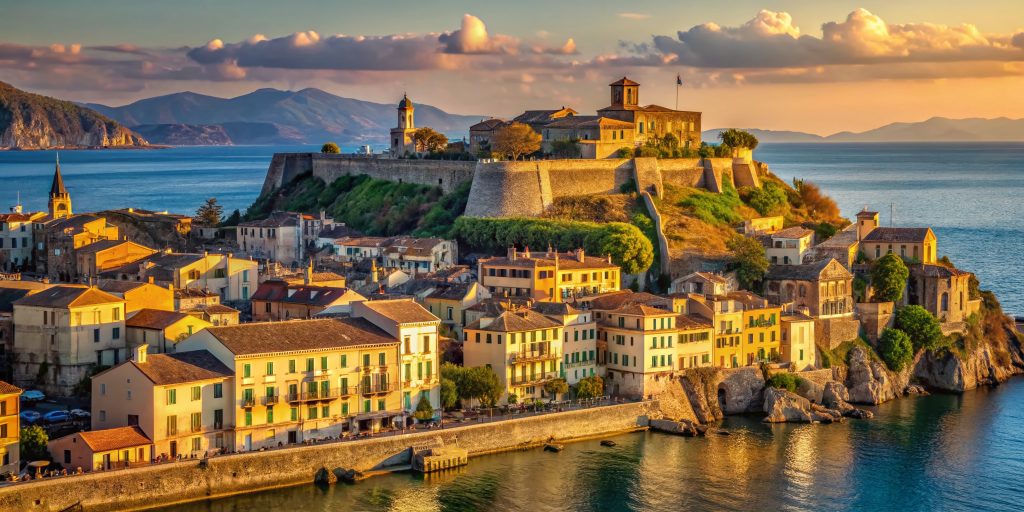
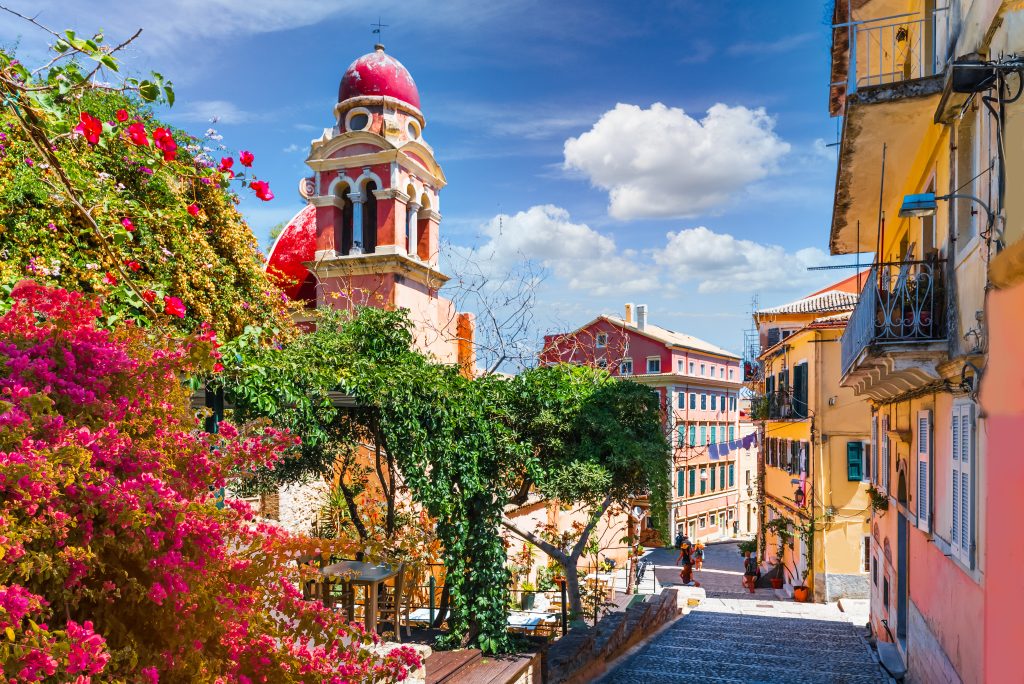
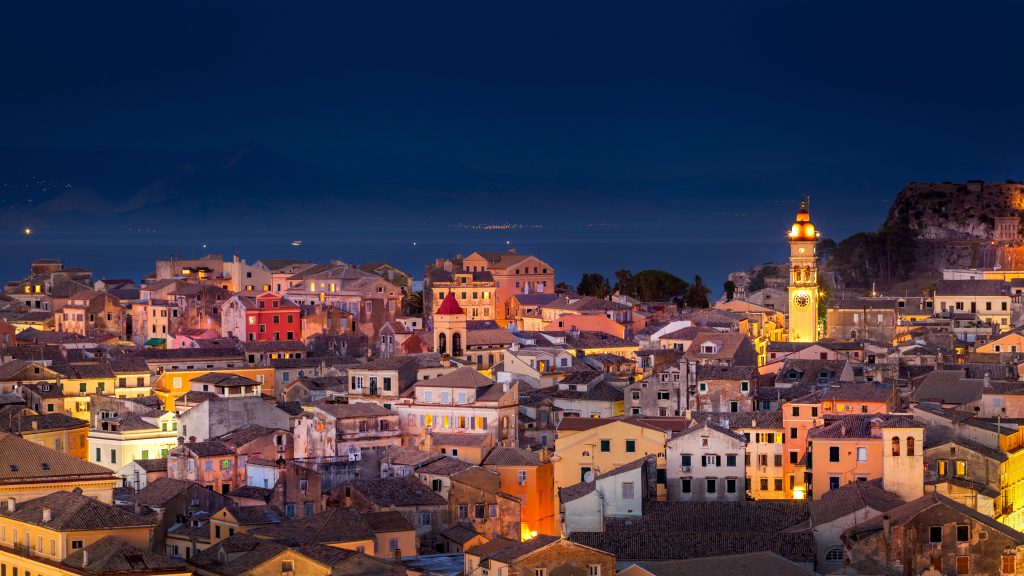
In the beautifully preserved Old Town of Corfu, a UNESCO world heritage site, Renaissance, Baroque and Classical “repertoire” came to be successfully applied to local artistic traditions. Palaces, fortresses, austere public buildings of the Venetian rule uniquely blend with lines of drying washing in tiny alleyways and small secluded squares. Strolling through a complex of narrow cobbled streets with stairways and vaulted passages, the so-called “kantounia”, will make you feel as if you’ve travelled to Genoa or Naples.
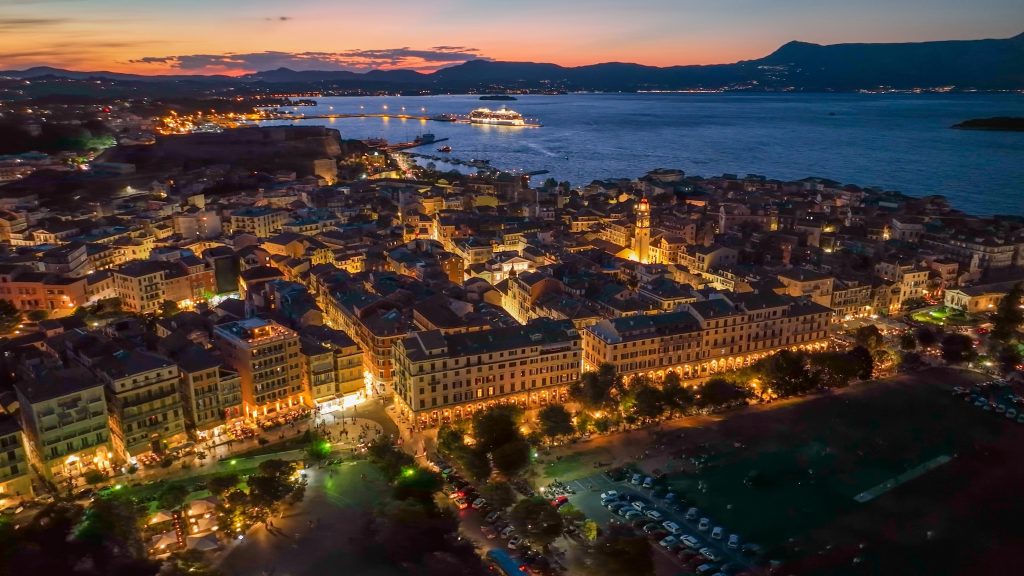
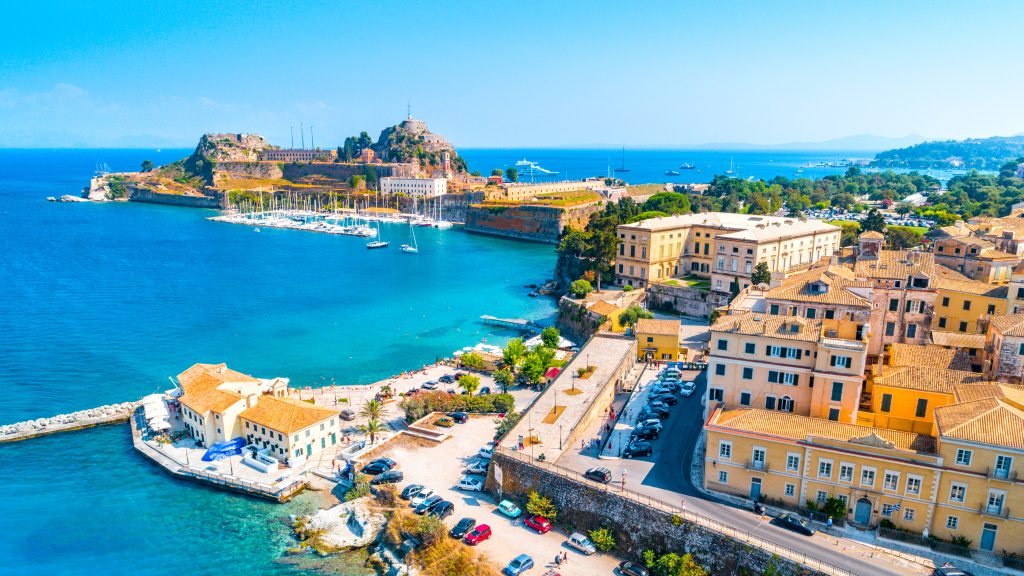
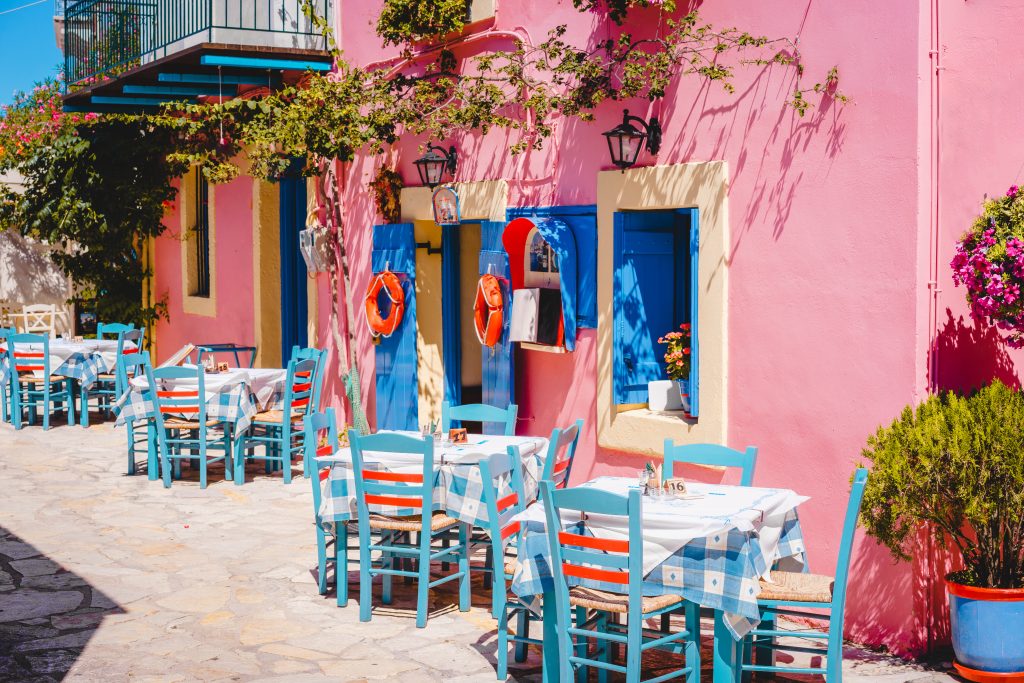
Discover the most beautiful spots in the city of Corfu walking through Spianada, the largest square in the Balkans, is the centre of the city, adorned with 19th-century remarkable works of French architecture. Here you can watch cricket games, or attend in musical concerts organised throughout the year. Visit Liston, the city’s trademark, where the aristocrats used to enjoy their evening promenades. The characteristic arcades form the most romantic background setting for a welcome cup of coffee at one of the town’s cosy cafés. Explore the smart suburbs Mandouki, Garitsa and Saroko. The most important city’s attractions bear eloquent witness to its rich history:
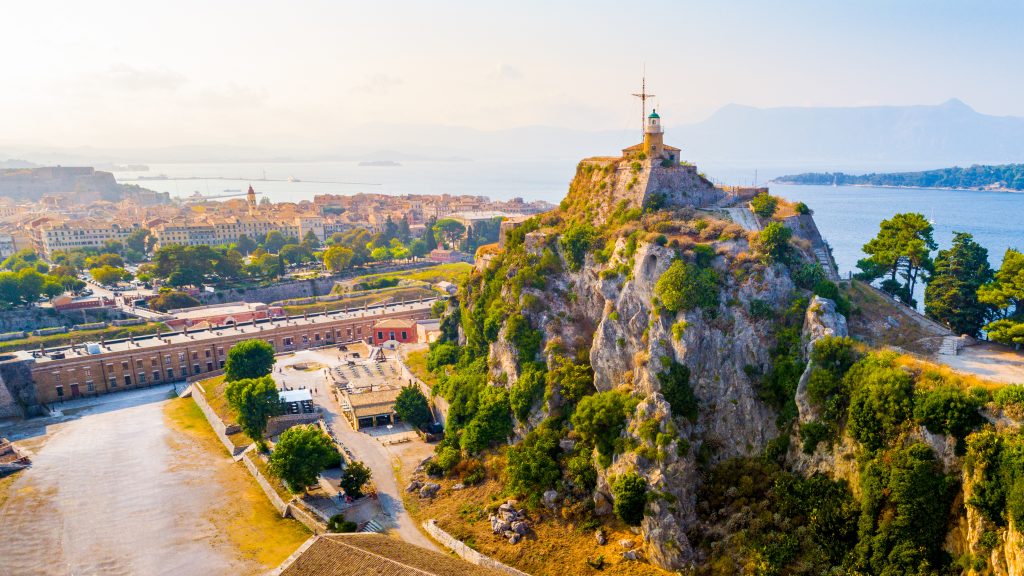
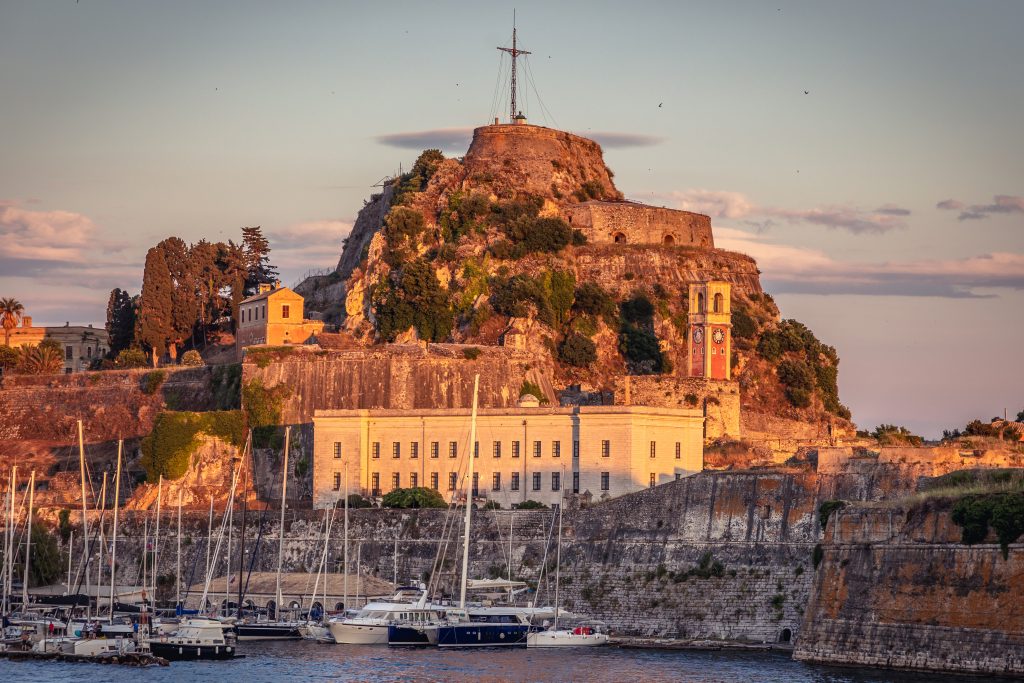
- The impressive 15th century Old Fortress, as well as the New Fortress.
- The Saint Michael and George Palace at the northern part of Spianada, built during the British occupation.
- A considerable number of churches. The most imposing one is the city’s Cathedral, the Church of St. Spyridon, the island’s patron Saint, whose relics are kept here. The church’s immensely tall bell tower certainly reminds us of that of San Giorgio dei Greci in Venice. Four processions are held every year during which the body of Saint Spyridon is carried around the streets of the city (on Palm and Easter Sunday, on April 11th and the first Sunday in November). All the philharmonic bands of the city accompany the processions creating a remarkable awe-inspiring spectacle.
Corfu Town (UNESCO World Heritage Site)
Start in the Old Town with its maze of narrow Venetian lanes. The Liston arcade along Spianada Square is perfect for coffee – it’s modeled on Paris’s Rue de Rivoli. Walk up to the Old Fortress (Palaio Frourio) for panoramic views across to Albania and the town below. The New Fortress (Neo Frourio) offers equally good views and is less crowded. Don’t miss the Church of Saint Spyridon, the island’s patron saint, with its distinctive red-domed bell tower. The Archaeological Museum holds excellent finds from the Temple of Artemis, including the famous Gorgon pediment. For something different, the Museum of Asian Art in the Palace of St. Michael and St. George has an unexpected collection of Chinese and Japanese art.
Achilleion Palace
About 10km south of town, this neoclassical palace was built for Empress Elisabeth of Austria (Sisi) in the 1890s. The gardens are spectacular, with dramatic views over the coastline, and it’s filled with statues of Achilles – her obsession. Later owned by Kaiser Wilhelm II.
North Coast Experiences
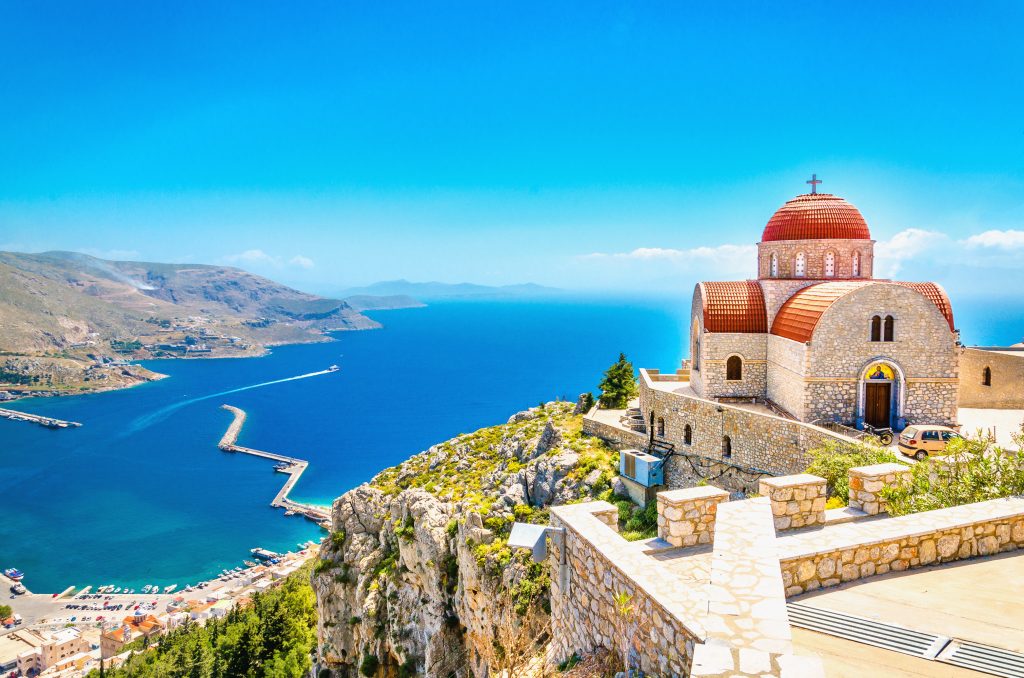
Paleokastritsa is the postcard-perfect spot on the west coast – dramatic cliffs, multiple coves with turquoise water, and the Byzantine monastery perched above. Get there early before tour buses arrive. Nearby Angelokastro is a Byzantine castle ruin with stunning 360-degree views. Further north, the beach towns of Kassiopi and Sidari offer different character – Kassiopi has a small harbor and castle ruins, while Sidari is famous for the Canal d’Amour rock formations.
Mountain Villages
Old Perithia in the north is a beautifully restored mountain village, abandoned in the 1960s and now coming back to life with tavernas serving traditional food. The drive up Mount Pantokrator (Corfu’s highest peak at 906m) rewards you with views across to Albania, Italy on clear days, and much of the island. Pelekas village on the west coast has the famous Kaiser’s Throne viewpoint for sunsets.
South & East
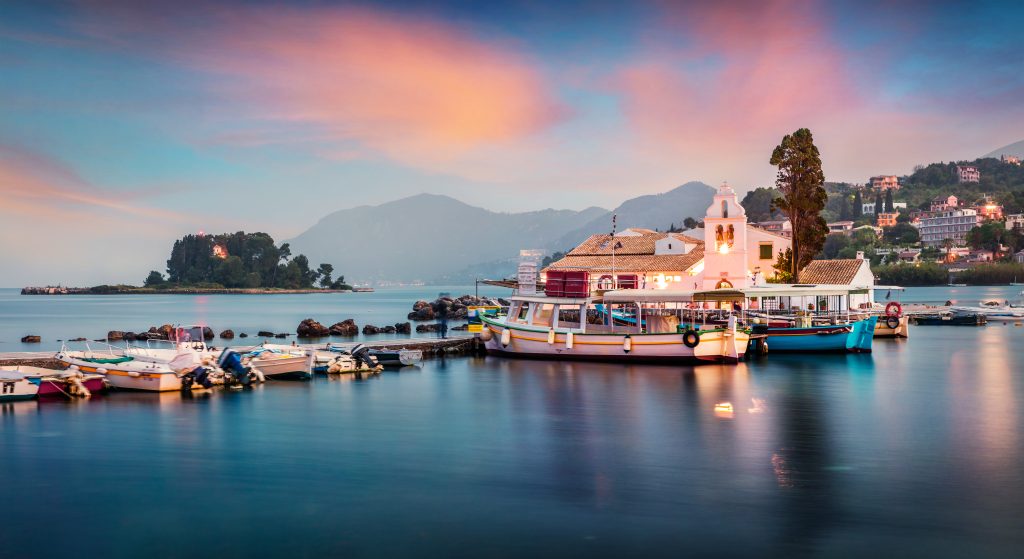
The Pontikonisi (Mouse Island) islet with its tiny monastery is Corfu’s most photographed spot – best viewed from Kanoni. The lagoon at Korission in the southwest is completely different from the rest of the island – a nature reserve with sand dunes and birdwatching.
Practical Tips
Rent a car or scooter to explore properly – buses exist but are limited outside main routes. The west coast roads are more dramatic and winding. Try local specialties like sofrito (veal in white wine sauce), pastitsada (pasta with spiced meat sauce), and kumquat liqueur (the island is covered in kumquat trees). In mid-July, expect hot weather (28-32°C), busy beaches but manageable crowds in cultural sites if you go early morning. The island is well set up for international visitors with English widely spoken.