
About Us
Governance and Official Documents
Fundamental Principles of Operation
Internal Regulations
Statutes
Board of Directors
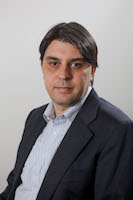
- Past-Chair
- U.K.
Dr. Dimitrios Rovas
- University College London
- d.rovas@ucl.ac.uk

- Treasurer
- Netherlands
Dr. Pieter Pauwels
- Eindhoven University of Technology
- p.pauwels@tue.nl

- Secretary
- Sweden
Dr. Dimosthenis Kifokeris
- Chalmers University of Technology
- dimkif@chalmers.se

- Vice-Chair
- U.K.
Dr. Theo Dounas
- Heriot-Watt University
- t.dounas@hw.ac.uk

- Chair
- Ireland
Dr. James O’Donnell
- University College Dublin
- james.odonnell@ucd.ie
Technical Committees
Role of all Technical Committees
- Gather, maintain and disseminate information on the application of the committee’s area to AEC/FM
Organise and support joint research activities in the committee’s area - Organise and support conference sessions, workshops, and meetings in the committee’s area
- Disseminate innovation in the committee’s area through position papers, white papers, grand challenges reports and policy work throughout the European spectrum
- Keep the SPAs aware of developments in the committee’s area
Data Sensing & Analysis Committee
The goal of the Data Sensing & Analysis Committee (DSA) of the European Council on Computing in Construction (EC3) is to interact with other AEC/FM societies, strengthen the collaborations between academia and industry in topics related to DSA’s mission, spearhead research, identify and promote effective ways to advance the state of knowledge and the level of education and practice, assist in the making of policy, and support existing and new related speciality conferences and publications.
Members
Modelling & Standards Committee
Members
Human-Data Interaction Committee
Scope
The physical world is becoming a platform for generating data on the workings of human society, its interactions with the physical environment, and other economic, political, and social interactions. The design, construction and operation of assets within the built environment at every level, ranging from an individual system to entire cities, is now pervaded by data that is generated by ubiquitous computing and sensing technologies. Understanding how interactions between humans and data are changing across these asset levels and project phases can unravel new insights across the engineering, social and management domains and the underpinning research methodologies.
The purpose of the HDI Committee of the EC3 is to foster and lead the research debate about HDI in engineering and construction projects and the operation of the built environment. It will represent the EC3 voice who will liaise with relevant industry and policy stakeholders (industry associations/societies, communities of practice, funding bodies, and policymakers) to identify priorities for research and education in HDI. It will strive to spearhead HDI research and practice in the selected areas of priorities. It will support existing and new conferences and journals concerning HDI topics in engineering and construction projects and the operation of the built environment.
The HDI committee will investigate:
- Theories, methodologies and methods involved in emerging HDI;
- Paradigms and frameworks for analysis, design and application of HDI;
- Development and evaluation of platforms, architectures or component technologies that underpin interactions between human actors and the data systems within projects and the built environment;
- Evaluation of existing technologies and designs through different testing methods (experiments, simulations, case studies, benchmarks, etc.);
- Understanding of users and their behaviours to inform the improvement and the design of new systems and/or policies;
- Extending interactions through the development of new uses and techniques; and
- Ethics and implications: understanding individual and societal implications and consequences of emerging interactions and novel uses of ICT and AI-related applications.
Members
Education Committee
The Modelling & Standards (M&S) committee is a permanent committee of the EC3 Committee and reports to the Board. This committee has the responsibility for promoting the research and innovation agenda of EC3 Committee on all matters relevant to modelling and standards development.
A key output of the M&S committee has been the BIM Standards Explorer, a Dashboard of Standards that are relevant to the EU construction industry.
Members
Administrative Committees
Lorem ipsum dolor sit amet, consectetur adipiscing elit. Ut elit tellus, luctus nec ullamcorper mattis, pulvinar dapibus leo.
Conference Committee
The Conference Committee is a permanent committee of the EC3 and reports to the EC3 Board.
The committee has the responsibility of organizing: a) the annual meetings of the EC3 Board and Committees, and b) the European Conference on Computing in Construction (EC3).
The European Conference on Computing in Construction
The European Conference on Computing in Construction (EC3) is the premier European Conference for information, communication and technological research, innovation and policy for the Construction Sector as a whole in Europe. Its remit is derived from the remit of the EC3 community. It is the physical home of EC3 and occurs on every odd year in July.
This conference serves as the venue for all EC3 in-person meetings that year. The International Conference on Computing in Civil and Building Engineering (ICCCBE) occurs every even year and serves as the venue for all EC3 in-person meetings that year.
The structure of this conference is modelled after the 2017 Lean and Computing in Construction Congress. Members of the EC3 committees run the conference. They share the following duties on top of their main committee duties as described in section 5:
- General Chair, responsible for a) the conference overall, and b) the summer school, student competition and young faculty mentoring events.
- Programme Chair, responsible for the paper management system, the paper review process, the selection of the top ten papers, and the compilation of camera-ready papers and the conference programme.
- Local Chair, responsible for all local matters including the conference venue, catering, transportation, accommodation, entertainment, permits and any other local arrangements.
- Dissemination Chair, responsible for the industry workshop, the website and social media.
- Publications Chair, responsible for the text and video proceedings, and the special issue.
This conference differentiates itself from other events through its singular focus on academic quality. This is made possible by adopting best practices heavily from highly regarded computer science conferences, these practices include, but are not limited to the following:
- Area Chairs in major thematic topics to manage relevant submissions
- Optional abstracts reviewed only for scope; review process focused on delivering substantive reviews for full papers
- Ranking of accepted papers to select the best papers and guide the format of presentations
- Plenary sessions with keynote lectures delivered by the authors of the highest-ranked papers.
- Extended Abstracts submitted along with camera-ready papers and included in the programme.
- 100% paperless. Digital programme and proceedings
- Video proceedings on Youtube linked to the digital proceedings
- A fast track for the best papers to special issues in the leading EC3-related journals.
The above practices increase the scientific rigour of the reviewing process and reward authors with highly ranked papers. This ensures that presentation sessions are interesting and value-adding and that attendees get the most out of the time they invest in this conference.
Members
Publications Board
The EC3 publications board is responsible for and carries out the publishing of the annual EC3 proceedings. The responsibility of the EC3 publications board is to ensure quality paper submission, peer-review, and proceedings/paper publication process.
The publications board is comprised by the proceedings editors and additional members.
Four positions on the publications board are reserved for academic programme chair, the publications chair, the conference chair, and the dissemination chair.
The remaining positions on the publications board are designated for the area chairs. Each area chair acts as the subject matter expert in a specific thematic area of the EC3 proceedings. Area chairs are responsible to give oversight of the review process, invite experts and for peer review of paper submissions, and give recommendation for final acceptance of papers to be published in their area of expertise.
Members
Awards Panel
The panel has the responsibility of adjudicating all nominations and providing recommendations to the EC3 board. Through its awards, the EC3 advances its mission of recognising the contributions of individuals in advancing the fields of interest to EC3 to the benefit of society. The awards panel is responsible for:
- Evaluating the nominations received
- Preserving the integrity of the evaluation process, assuring that the process is both open and rigorous and that the process contributes to the prestige of the council and the awards recipients
Members
The EC3 awards panel at present is directed by the past chair of the EC3 Board (Dimitrios Rovas, University College London, U.K.) and composed initially by the individuals who have lent their names to the EC3 awards:
In the future, European academics among the previous year’s recipients of the Thorpe Medal, Scherer Award and Smith Prize will be invited to be part of the panel.
Sign Up to our Newsletter
Stay informed with the latest news, events, and updates from EC³ — subscribe to our newsletter.
By clicking Sign Up you’re confirming that you agree with our Terms and Conditions.